
News · Desk wire
The desk wire is the short-form surface for verified notes that do not yet warrant a full chapter. Each note is attributed, timestamped and subject to the same source hierarchy as the rest of the desk. When a note grows into a full chapter, it is moved and the wire entry is updated with a link.
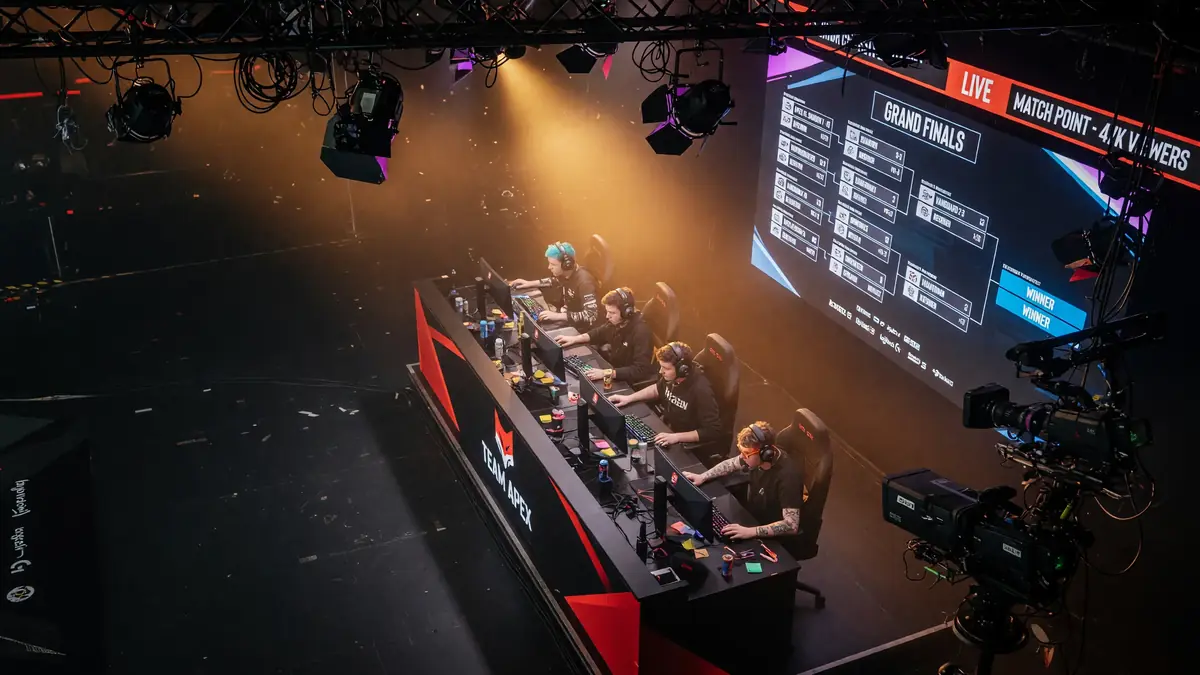
Three upper-bracket quarter-finals decided. North Light 2–0 Tide Group. Helix 2–1 Echo. Orbital 2–0 Pulse. Vanguard 2–1 Mesh. Lower-bracket decider Tide Group versus Pulse scheduled 22:30 UTC. Source: circuit calendar + broadcaster schedule. Full chapter: Tournaments.
Helix captain swap filed under rule 4.2 and verified against the APAC circuit site. Roster dossier re-verified within the hour. Source: APAC circuit site. Full chapter: Teams.
Orbital roster freeze extended for Stage 2. Verified against the AMER circuit site. No substitutions filed. Source: AMER circuit site. Full chapter: Teams.
Patch 7.4b meta context re-verified against developer release notes. Duelist entry cost raised. Controller walls extended on two maps. Sentinel traps unchanged. Initiator recon narrowed on one map. Source: developer release notes. Full chapter: Patches.
Viewing matrix re-verified against broadcaster schedules. Primary broadcast, co-stream partners, circuit app, regional partners and post-match on demand all confirmed for the current window. Source: broadcaster schedules. Full chapter: Viewing.
Match ledger rebuilt for tonight's 18:30 UTC series. Confirmed facts: start time, rosters, patch, format. Editorial scenarios: map veto, adaptation window, series tempo, coach voice. Source: circuit registration + broadcaster pre-match desk. Full chapter: Match centre.
Every wire note is attributed to a primary source and carries a verification timestamp. When a note grows into a full chapter, the wire entry is updated with a link. When a note is revised, the revision is stamped and the previous claim is not silently rewritten.
The wire is not a prediction surface. The wire is a verified-note surface. Readers who want editorial scenarios can open the match ledger. Readers who want the long-form method can open the guides chapter.
Live desk coverage is available through the broadcast partner route. Editorial content remains independent of the sponsored path.
The wire is the short-form surface. Full chapters are the long-form surface. When a note grows into a full chapter, the wire entry is updated with a link. When a full chapter is revised, the wire entry is updated with a revision stamp. The wire never silently deletes a note. The wire never silently rewrites a past claim.
Readers who want the short-form surface should stay on the wire. Readers who want the long-form surface should open the linked chapter. Readers who want the method should open the guides chapter.
The wire will not publish unverified tips. The wire will not publish community rumours. The wire will not publish predictions. The wire will not publish probability-led forecasts. The wire will not publish invented fixtures, rosters, scores or patch details. The wire will not publish wagering promotions.
The wire will publish verified notes with a primary source and a verification timestamp. The wire will publish links to full chapters when a note grows. The wire will publish revision stamps when a note is revised.
The desk publishes an edition masthead on every page. The edition number increments when a material update lands. Edition 147 is the current edition. The edition cycle is the desk's way of making updates visible. Readers who want to know whether a page is current should check the edition number and the verification timestamp.
Material updates include roster changes, schedule shifts, patch context re-verifications, match ledger rebuilds and viewing matrix re-verifications. Non-material updates include typo fixes and style adjustments and do not increment the edition number.
During a live match window the wire updates every 15 minutes. The updates are verified notes, not play-by-play. The desk does not invent live scores. The desk publishes completed results after the broadcaster confirms them. The desk publishes path updates after the bracket fragment is rebuilt.
Readers who want play-by-play should open the primary broadcast. Readers who want verified notes should stay on the wire. Readers who want the long-form post-match read should wait for the film room rebuild.
Every wire note has four parts: a timestamp, a headline, a body paragraph with the verified claim, and a source attribution with a link to the full chapter when one exists. The timestamp is the verification time. The headline is the claim in short form. The body is the claim in full form. The source is the primary document.
A wire note without a source is not a wire note. A wire note without a timestamp is not a wire note. A wire note that invents a claim is not a wire note. The desk does not publish incomplete notes.
When a note grows into a full chapter, the wire entry is updated with a link. The note is not deleted. The note is not rewritten to remove the claim. The note becomes a pointer to the long-form surface. Readers who want the short form stay on the wire. Readers who want the long form open the chapter.
The growth path is one-way. A chapter can be revised. A wire note that points to a chapter can be stamped with a revision. A chapter is not collapsed back into a wire note.
During a live match window the wire updates every 15 minutes. The updates are verified notes, not play-by-play. The desk does not invent live scores. The desk publishes completed results after the broadcaster confirms them. The desk publishes path updates after the bracket fragment is rebuilt.
Readers who want play-by-play should open the primary broadcast. Readers who want verified notes should stay on the wire. Readers who want the long-form post-match read should wait for the film room rebuild after the series ends.
A good wire day has a morning matrix re-verification, a midday roster or schedule note if one exists, a pre-match ledger rebuild, live-window path updates every 15 minutes, and a post-match film room link. Not every day has every note. Every note that exists is verified.
Wire voice is short, timestamped and source-first. Chapter voice is long, structured and allowed more teaching prose. Mixing the voices produces either bloated wire notes or thin chapters. The desk keeps them separate on purpose.
A wire note should be readable in thirty seconds. A chapter should be readable in fifteen to twenty minutes. If a wire note needs more than thirty seconds, it probably wants to be a chapter.
Headlines on the wire state the claim. They do not tease. They do not use mystery. "Helix captain swap verified" beats "Something big just happened on Helix."
The news index is chronological with the newest verified notes first. It is not a popularity ranking and not a sponsored shelf.
Latest means latest verified, not latest rumoured. A rumour from one minute ago is older than a verification from five minutes ago in desk time. Desk time runs on verification timestamps.
Edition numbers help readers see material updates across the site, not only on the wire. A wire note may land inside an edition without incrementing it if the note is minor. A roster change increments.
During quiet days the wire may only carry the daily matrix re-verification. Quiet days are allowed. Invention to fill quiet days is not.
Readers who need constant stimulus will bounce. Readers who need a reliable desk will stay. The product is built for the second group.
Wire notes link to chapters and sometimes to external primary sources. External links can rot. When a primary source URL dies, the desk notes the death on the next verification pass and, where possible, replaces it with an archived reference or a circuit-side mirror.
Internal links are checked as part of build verification. A wire note should not point to a removed chapter. If a chapter is retired, the wire note is updated.
Historical wire notes remain as the record of what was verified when. They are not deleted to tidy the narrative.
The news page is therefore both a live surface and a light archive. The sitemap includes it with a weekly changefreq because the live function dominates.
No. The wire is a verified-note surface. Editorial scenarios live in the match ledger.
Active match windows produce notes every 15 minutes. Other surfaces produce notes on their verification cadence.
The wire entry is updated with a link to the full chapter. The note is not deleted.
No. Every note is attributed to a primary source and carries a verification timestamp.
Through the corrections contact on the Contact page. Substantive corrections are timestamped and surfaced publicly.
Yes. Sponsored routes are clearly labelled. Editorial content remains independent of the sponsored path.